Fog Computing: The Next Step for Autonomous Cars?
Jake Jones
August 14, 2017


Jake Jones
August 14, 2017
The autonomous or self-driving car is coming, and coming fast. All major players are coming out with announcements and predictions which point at 2020 as the big year, when the top car manufacturers will break-through into fully working self-driving models.
It would seem that we’ve reached a stable technological level to allow for autonomous systems of all type, and as such for a while now the self-driving car was conceptually ready, with just a few small bumps left to straighten.
The big question is what will the next step be? And is fog computing the answer?

These are exciting times. The concept of autonomous cars has moved within the space of just a few years from an interesting idea held by a selection of forward-thinkers, to a wide and accepted concept – believed by most to be a complete reality within the near future.
Automobile market leaders such as Volkswagen, Ford, and General Motors have all predicted the first fully automated level 4 cars will hit roads by 2020. US Secretary of Transportation had also predicted that by 2025 self-drive cars will be in use all around the world. As for the first models and solutions to unveil, Jaguar and Land-Rover self-drive models are set for around 2024 (Drive.com.au), Nissan plans to provide consumer self-drive cars by 2020, while Google how was an early adopter of the concept is planning on introducing a fully autonomous car by 2018 (Drivless-Future.com). In fact according to IEEE, in just over 20 years by 2040, 75% of all vehicles will be autonomous.
The recent purchase of Mobileye by Intel also promises a bright future for technical self-driving solutions already in market, with further resources going into fine-tuning under Intel’s umbrella. With all the buzz around autonomous level 4 vehicles, it seems the race is on – with a number of important giants out to get the first fleet of cars ready within the near future.
As with many technological leaps, it takes time for the governments and legislation systems to define the legal framework surrounding new concepts. It remains to be seen how these new autonomous cars will be implemented in the real world, and what regulations will surround them. Currently it would seem most countries are embracing this future, owing to the environmentally-wise nature of these cars, not to mention how safe roads would become when human error is brushed away.
At its core, a self-driving car is a simple concept. An on-board system takes real-time sensory data and operates the car in accordance with road conditions, speed limits, specific circumstances and of course other vehicle and objects’ behavior.
To achieve this, the car is packed with sensors of all kinds and from all direction, teaching the system the distances from other objects. Special visual recognition modules add a layer of environmental knowledge, for example reading road signs and avoiding pot-holes, this is all added to an internal set of sensors that asses the vehicle’s speed, engine state and so on. These are connected to the car’s operating modules which control acceleration, steering, emergency functions, and all functions normally controlled by the driver.
Level 4 autonomous driving is today the highest standard of self-driving; it defines a system that is able to carry out almost all functions of safely driving, but also allows for driver intervention in extreme circumstances.
As both technical system developers and car manufacturers race to showcase a fully autonomous working model, the emphasis is naturally on tuning all parts of the system to optimize the car functionalities.
So what’s the next step?

What if autonomous cars could be made truly smart? Imagine a car that could outsmart traffic, learn about weather conditions further down the road, automatically contact emergency services in case of any problems, keep track of the engine state and monitor wear-and-tear in real time, and so on… the list is endless – limited only by our imagination.
All these solutions are already possible within the scope of the Internet of Things, or the “smart” concept, all they require is an optimized network able to connect in real-time vehicles on the road with different network clouds, with each other, and with any services needed.
To achieve this, it’s important to define an internal car network (controlling autonomous drive and gathering environmental data) and an external “shared” network. In order to keep the shared network secure, free of unnecessary clutter, and optimized to transfer important data first we need to implement modules at the edge of the network (see edge computing) – to mediate between the cars and the larger network. These “fog computing” modules can be installed on existing infrastructure, such as lamp posts, cellular towers or electricity lines along selected roads.
In preparation of this next big leap in smart autonomous transportation, the communication giant AT&T has recently announced plans to utilize communications infrastructure for use in fog computing modules (including some 65,000 cell towers owned by AT&T) as part of the smart self-driving revolution. With the emerging infrastructural need, other communication and infrastructural companies are sure to jump on board this booming new market so following in the steps of AT&T.
As we’ve seen, the ability is in place, the commercial strategies are slowly unfolding, and more and more market leaders are keen to jump on board the self-drive wagon. It remains to be seen how the different models set to hit the market in following years will perform, but the biggest question is how will the dots be connected.
Are we looking at a world-wide massive revolution, effecting all road transportation? Or a simple product that will support vehicle fleets and public transportation in western countries?
The holy grail of autonomous transport will no doubt be “smart”; utilizing an external fog computing architecture, but that’s in the future we need self-driving cars to work well and integrate into people’s lives.
The good news is we haven’t got long to wait.
*Image: Flickr. by S. Juvetson
Have any thoughts on fog computing and the autonomous car? Why not share in the comments below.
 https://www.solid-run.com/wp-content/uploads/2026/07/Embedded-Solutions-for-Security-and-Defense.png
768
1376
Mona Ganem
https://solid-run.com/wp-content/uploads/2020/12/SolidRun-with-under-line-01-1-300x107.png
Mona Ganem2026-07-20 17:07:502026-07-23 10:06:52Security and Defense Embedded Solutions
 https://www.solid-run.com/wp-content/uploads/2026/07/Industrial-Automation-Solutions-Enabling-Intelligence-at-the-Edge1.png
768
1376
Mona Ganem
https://solid-run.com/wp-content/uploads/2020/12/SolidRun-with-under-line-01-1-300x107.png
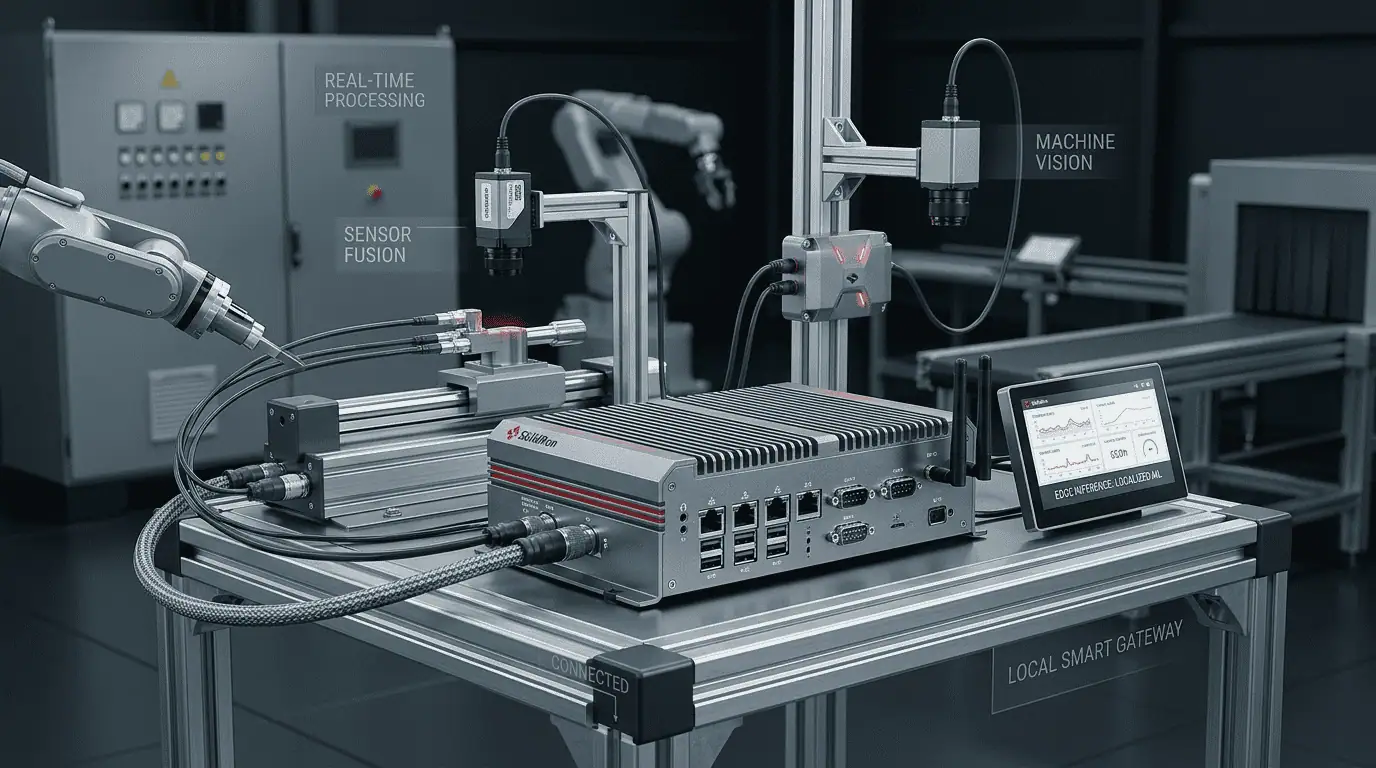
Mona Ganem2026-07-20 17:02:032026-07-23 10:08:47Industrial Automation Solutions Edge AI
 https://www.solid-run.com/wp-content/uploads/2026/07/Renesas-SoMs-Edge-AI-RZG2L.png
768
1376
Mona Ganem
https://solid-run.com/wp-content/uploads/2020/12/SolidRun-with-under-line-01-1-300x107.png
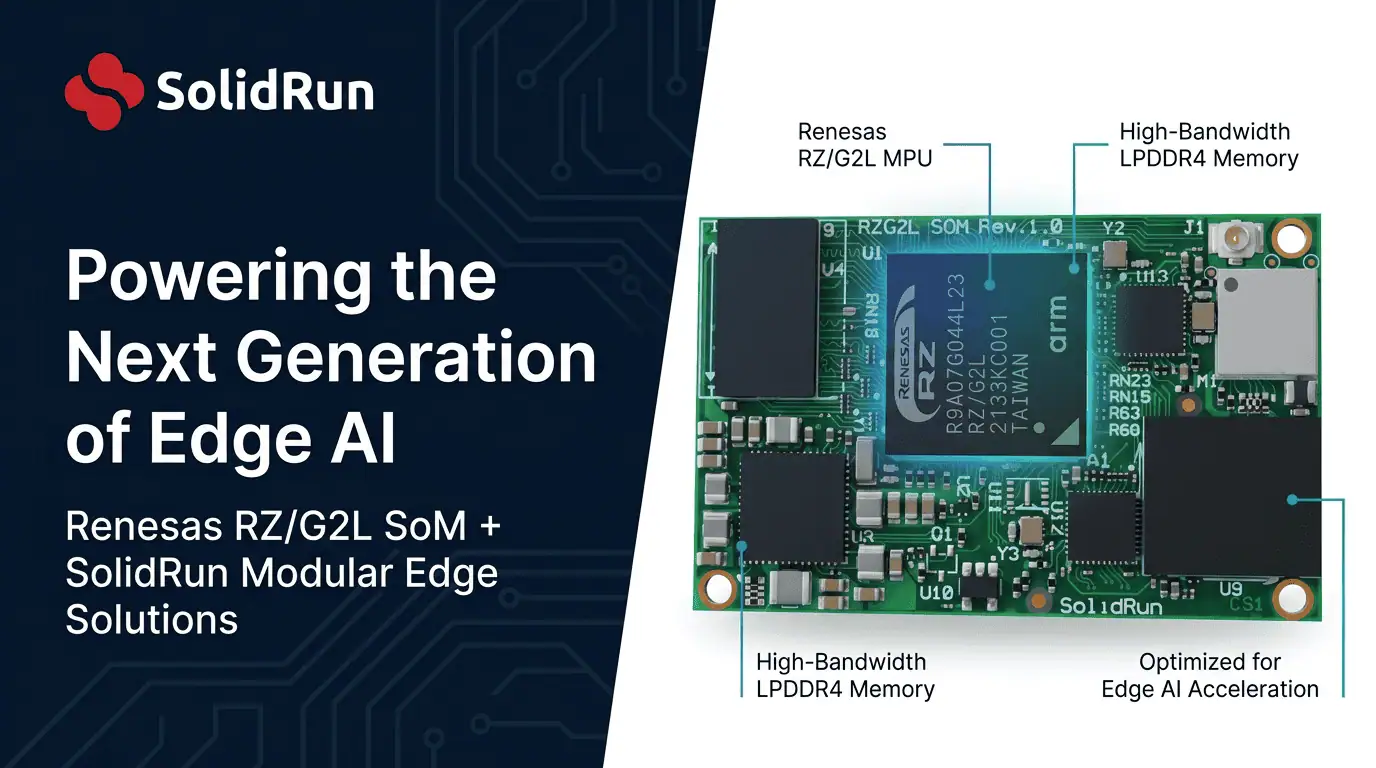
Mona Ganem2026-07-13 14:42:022026-07-13 14:58:20Renesas SoMs Edge AI
 https://www.solid-run.com/wp-content/uploads/2026/07/Developer-Center-whitepaper-LLM-and-MCP-banner.png
1200
2133
Mona Ganem
https://solid-run.com/wp-content/uploads/2020/12/SolidRun-with-under-line-01-1-300x107.png
Mona Ganem2026-07-12 18:50:082026-07-13 10:25:03LLMs and MCP Documentation for Developer
 https://www.solid-run.com/wp-content/uploads/2026/06/SolidRun-and-Peridio-Take-Vision-AI-from-Prototype-to-Production-Fleet.png
768
1376
Mona Ganem
https://solid-run.com/wp-content/uploads/2020/12/SolidRun-with-under-line-01-1-300x107.png
Mona Ganem2026-06-04 18:23:302026-06-22 11:53:32SolidRun and Peridio Take Vision AI from Prototype to Production Fleet
 https://www.solid-run.com/wp-content/uploads/2026/05/Quick-Draw-Doodle-Recognition-RZV2N-Demo-SolidRun.png
752
1381
Mona Ganem
https://solid-run.com/wp-content/uploads/2020/12/SolidRun-with-under-line-01-1-300x107.png
Mona Ganem2026-05-07 13:23:102026-05-10 12:09:09AI RZ/V2N Demo: Quick Draw Doodle Recognition
Products
Support
Newsletter