

Embedded Solutions for Security and Defense: Enabling Intelligence at the Tactical Edge

Embedded Solutions for Security and Defense

Modern defense and security operations are undergoing a profound transformation. Embedded systems for security and defense, powered by AI, edge computing, and advanced computing architectures are reshaping how mission-critical decisions are made, how data is processed, and how systems operate in the field.

In today’s operational environments, data is no longer sent to centralized systems for analysis. Instead, intelligence is generated at the edge, on drones, vehicles, sensors, and deployed communication nodes. This shift is driven by the need for speed, resilience, and autonomy in environments where connectivity may be limited, unreliable, or actively contested.

Edge AI and embedded computing now form a foundational layer in next-generation defense systems. These technologies enable real-time threat detection, autonomous decision-making, secure communications, and predictive analytics directly at the operational point of action.

By providing advanced embedded computing platforms, SolidRun enables OEMs, integrators, and defense technology providers to build robust, secure, and scalable systems for mission-critical applications. The following use cases demonstrate how edge computing is applied across modern security and defense domains.

Intelligent Edge Vision Systems for Tactical Awareness

Operational Challenge

In defense and security operations, situational awareness is a decisive factor. Systems must be capable of detecting, classifying, and responding to potential threats in real time. However, traditional architectures relying on centralized processing or cloud connectivity introduce unacceptable limitations:

  • High latency in decision-making
  • Dependence on unreliable communication links
  • Vulnerability in contested or denied environments
  • Limited bandwidth for real-time video and sensor streams

In mission-critical scenarios such as perimeter defense, surveillance, and autonomous reconnaissance, systems must operate independently and reliably even in GPS-denied or communication-degraded environments.

Evaluation Criteria

An effective edge vision system for defense must deliver:

  • Ultra-low latency AI inference
  • Secure, local data processing without cloud dependency
  • High-performance object detection and classification
  • Ruggedized operation under harsh environmental conditions
  • Low power consumption for mobile and embedded platforms
  • Support for autonomous or semi-autonomous decision-making

Solution Overview

An intelligent edge vision system built on the Hailo-15 System on Module enables real-time AI inference directly on-device. The Hailo-15H delivers 20 TOPS of AI inference at a typical power draw of under 5W, running object detection models on 4K video streams directly on-device.
This architecture enables autonomous systems to analyze video streams locally, detect threats, and respond instantly without external compute dependency.

Integration Approach

The solution integrates AI acceleration with embedded vision processing, enabling:

  • Real-time object detection and classification
  • Autonomous navigation for unmanned systems
  • Edge-based threat recognition and alerting
  • Secure processing of sensitive visual intelligence

The compact design of the platform allows integration into drones, unmanned ground vehicles (UGVs), surveillance systems, and mobile reconnaissance platforms where space, power, and thermal constraints are critical.

Operational Impact

The deployment of intelligent vision systems at the edge delivers measurable operational advantages:

  • Instantaneous threat detection without network delay
  • Increased autonomy for unmanned defense platforms
  • Improved resilience in GPS-denied environments
  • Reduced dependency on vulnerable communication infrastructure
  • Enhanced mission reliability in contested zones

By moving intelligence closer to the sensor, defense systems gain a decisive advantage in speed, adaptability, and survivability.

Secure Digital Workplace for Classified Environments

Operational Challenge

Modern defense organizations require secure, compliant digital environments capable of handling sensitive and classified data. Traditional enterprise IT systems are insufficient for environments requiring adherence to national, EU, or NATO security classifications.
Key challenges include:

  • Strict data protection and compliance requirements
  • Secure handling of classified information up to Restricted level
  • Risk of data leakage in distributed environments
  • Need for controlled access and auditing mechanisms

Evaluation Criteria

A secure digital workplace must provide:

  • End-to-end encryption for all communications and data
  • Hardware-rooted trust and secure boot mechanisms
  • Controlled and auditable access to sensitive systems
  • Compliance with defense-grade security standards
  • Flexible deployment (cloud or on-premises)

Solution Overview

A secure digital workplace architecture based on the HummingBoard RZ/G2L Single Board Computer enables highly secure and configurable environments for defense-grade applications.
This platform supports both hardware and software customization, enabling tailored security features aligned with specific defense requirements.

Integration Approach

SolidRun collaborated with partners to deliver a fully integrated solution including:

  • Custom carrier board development based on RZ/G2L SoM
  • Integration of advanced security and encryption features
  • Thermal design and simulation for rugged deployment environments
  • Fully branded enclosure design for operational deployment
  • Compliance testing and certification support
  • Transition to mass production at scale

Operational Impact

The resulting solution delivered:

  • Secure computing environments for classified operations
  • Reduced deployment complexity through turnkey integration
  • Improved operational efficiency with centralized management
  • Scalable production enabling rapid field deployment
  • Enhanced data protection across all system layers

This approach demonstrates how embedded platforms can support not only performance requirements but also stringent defense-grade security standards.

Tactical and Emergency Services Communication Bubbles

Operational Challenge

Modern military and emergency response operations depend heavily on reliable communication infrastructure. However, in disaster zones or contested environments, traditional communication networks may be unavailable or compromised.
Critical requirements include:

  • Rapid deployment of secure communication infrastructure
  • High-bandwidth connectivity for voice, video, and data
  • Support for autonomous systems such as drones and vehicles
  • Resilience in infrastructure-less environments

Evaluation Criteria

A tactical communication system must provide:

  • Secure, private, and self-contained network operation
  • Low-latency connectivity for real-time coordination
  • Scalability across mobile and distributed units
  • Compatibility with 5G and advanced wireless technologies
  • Rugged, portable deployment capability

Solution Overview

A deployable communication infrastructure based on LX2-Lite System on Module and ClearFog CN9130 SBC enables the creation of tactical and emergency communication bubbles.
These systems function as portable network nodes that establish secure connectivity in environments without existing infrastructure.

Integration Approach

The platform enables:

  • Rapid deployment of mobile 5G or wireless networks
  • Real-time communication between drones, vehicles, and command centers
  • Integration of AI analytics for situational awareness
  • Secure voice, video, and data transmission
  • Mesh and ad-hoc networking capabilities

Operational Impact

  • Restored communications in disaster or conflict zones
  • Improved coordination between field units and command centers
  • Enhanced situational awareness through real-time data sharing
  • Increased operational resilience under infrastructure failure
  • Scalable deployment across multiple mission scenarios

IoT Gateways for Secure Access Control

Operational Challenge

Security infrastructure in modern facilities requires intelligent access control systems capable of managing identity, permissions, and real-time monitoring. Traditional mechanical systems lack flexibility, scalability, and centralized control.

Evaluation Criteria

Systems must support:

  • Multi-factor authentication methods
  • Real-time access monitoring and audit trails
  • Integration with cloud and IoT platforms
  • High reliability for critical infrastructure
  • Scalable deployment across facilities

Solution Overview

An intelligent access control system based on the HummingBoard RZ/G2L SBC enables secure, connected, and centrally managed access infrastructure.

Integration Approach

  • Integration of biometric and credential-based authentication
  • Cloud-connected monitoring and management systems
  • Custom platform and branding for system integrators
  • Co-development with networking software vendors
  • Optimized hardware design for security applications

Operational Impact

  • Enhanced facility security and monitoring
  • Real-time access control visibility
  • Scalable deployment across enterprise and industrial sites
  • Reduced operational overhead through centralized management

ARM Servers for Defense Edge Computing

Operational Challenge

Defense organizations require efficient compute platforms for workloads such as cryptography, simulation, intelligence analytics, and cybersecurity operations. Traditional x86 systems often introduce high power consumption and cooling requirements.

Evaluation Criteria

  • High compute density with low power consumption
  • Support for virtualization and containerized workloads
  • Secure data processing capabilities
  • Scalability for edge and private cloud deployments

Solution Overview

The HoneyComb 1U Server provides a compact, energy-efficient ARM-based compute platform designed for defense and edge environments.

Integration Approach

The platform features:

  • Dual NXP LX2160A ARM processors
  • High memory capacity with ECC support
  • Multiple high-speed networking interfaces (10GbE)
  • PCIe, NVMe, and SATA expansion options
  • Secure boot and hardware-based security features

Operational Impact

  • Reduced energy consumption compared to traditional servers
  • Efficient processing of encryption and security workloads
  • Flexible deployment for edge data centers
  • Improved cost efficiency for large-scale infrastructure

Quantum-Safe Security for Future Defense Systems

Operational Challenge

A platform for implementing post-quantum cryptography: hardware security engines offload classical cryptographic operations, while post-quantum algorithms run efficiently on the 16 Cortex-A72 cores. This keeps throughput high while enabling migration to quantum-resistant protocols. 

Evaluation Criteria

  • Resistance to quantum computing-based attacks
  • Compatibility with existing infrastructure
  • High-throughput encryption performance
  • Scalability for national-level deployments

Solution Overview

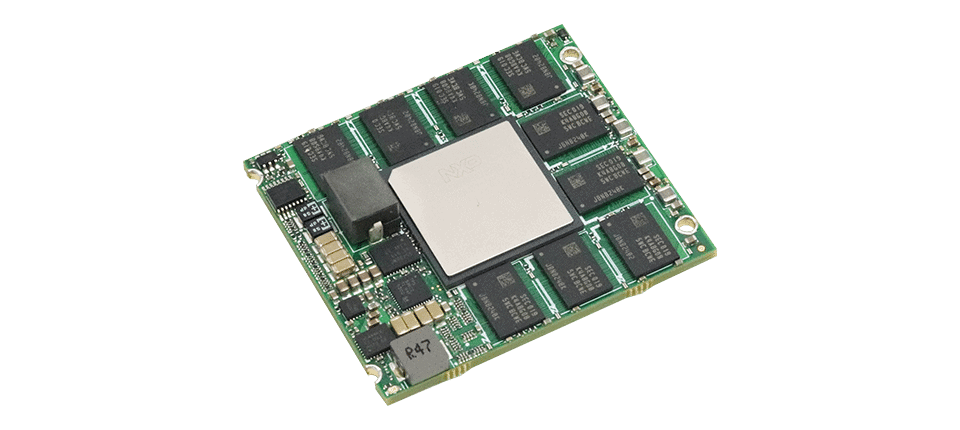
A quantum-safe security architecture based on LX2160A Computer on Module enables advanced cryptographic processing and secure networking for next-generation defense systems.

Integration Approach

  • Hardware-accelerated cryptographic engines (SEC)
  • Offloading encryption tasks from CPU cores
  • Support for high-throughput secure networking
  • Modular design for rapid system integration

Operational Impact

  • Enhanced protection against future quantum threats
  • Improved system performance through hardware offloading
  • Reduced system complexity and cost
  • Scalable deployment for secure communications infrastructure

Conclusion: Building the Future of Defense at the Edge

Defense and security systems are rapidly evolving from centralized, hardware-heavy architectures into distributed, intelligent, and autonomous edge ecosystems.

Across vision systems, secure workplaces, communication networks, gateways, and compute infrastructure, the common requirement is clear: real-time intelligence, resilience in contested environments, and uncompromising security.

Embedded platforms and edge computing technologies enable this transformation by bringing processing, AI, and decision-making directly to the operational environment—where speed and reliability are critical.

By enabling compact, secure, and high-performance embedded solutions, SolidRun supports defense innovators in building the next generation of mission-critical systems—capable of operating anywhere, under any conditions, with intelligence at the edge.

Related Products

HummingBoard RZG2L Sideways

LX2160 sideways large

ASR honeycomb

SOM LX2162A side top slider 1

Hailo 15 SOM sideways2025 Large

Never Miss an Update

Other News

SolidRun and Peridio Take Vision AI from Prototype to Production Fleet
SolidRun and Peridio Accelerate Development of Physical AI Deployments by Adding Avocado OS to RZV2N Vision AI Platforms
HoneyComb P100 and COMe6 Blog
Thank you for your message. It has been sent.
Skip to content